Webb observations help researchers reconstruct stellar merger in Andromeda
NASA says telescope data allowed a first direct measurement of common envelope evolution efficiency, while dust still obscures the merger’s remnant.
Numbers in brackets link to the sources listed below.
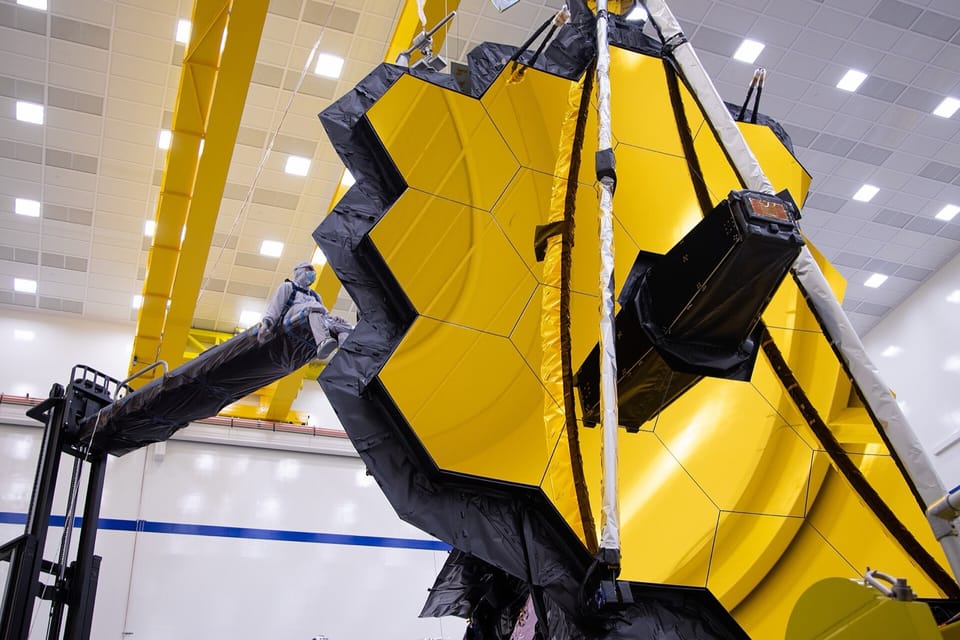
NASA’s James Webb Space Telescope helped researchers reconstruct a stellar merger at the edge of the Andromeda galaxy using observations from December 2025, NASA said[1NASAAT 2025abao in the Andromeda GalaxyOpen sourceSources [1]]. The system, nicknamed Bao, contained a pair of stars[1NASAAT 2025abao in the Andromeda GalaxyOpen sourceSources [1]].
NASA says comparing Webb’s observations with simulations established that the stars merged and yielded the first direct measurement from telescope data of common envelope evolution efficiency[1NASAAT 2025abao in the Andromeda GalaxyOpen sourceSources [1]]. Common envelope evolution involves paired stars orbiting inside a shared layer of gas.
Webb collected mid-infrared observations over three hours on 24 December 2025, allowing the team to trace centuries of dust expelled by the primary star, according to NASA[1NASAAT 2025abao in the Andromeda GalaxyOpen sourceSources [1]]. Earlier, on 17 October 2025, the Zwicky Transient Facility had detected a visible-light eruption as the stars rapidly brightened and heated up[1NASAAT 2025abao in the Andromeda GalaxyOpen sourceSources [1]].
Science News reports that the team estimates only about a tenth of the giant star’s outer gas escaped during the outburst[2Science NewsTwo stars in the Andromeda galaxy merged before astronomers’ eyesOpen sourceSources [2]]. The energy of that escaping gas also suggests the smaller star reached its partner’s core, supporting the merger explanation[2Science NewsTwo stars in the Andromeda galaxy merged before astronomers’ eyesOpen sourceSources [2]].
Dust still obscures the remnant and could take years or decades to settle, Science News reports[2Science NewsTwo stars in the Andromeda galaxy merged before astronomers’ eyesOpen sourceSources [2]]. The researchers plan to keep watching and search for similar systems, hoping to observe more before they erupt[2Science NewsTwo stars in the Andromeda galaxy merged before astronomers’ eyesOpen sourceSources [2]].
Sources
- 1AT 2025abao in the Andromeda Galaxy
PrimaryNASAAccessed
- 2Two stars in the Andromeda galaxy merged before astronomers’ eyes
IndependentScience NewsAccessed
ITANU’s newsroom system produced this article with AI and checked it against the sources listed above. How we work