ESA releases Hera views of asteroid Didymos from 28.5 km away
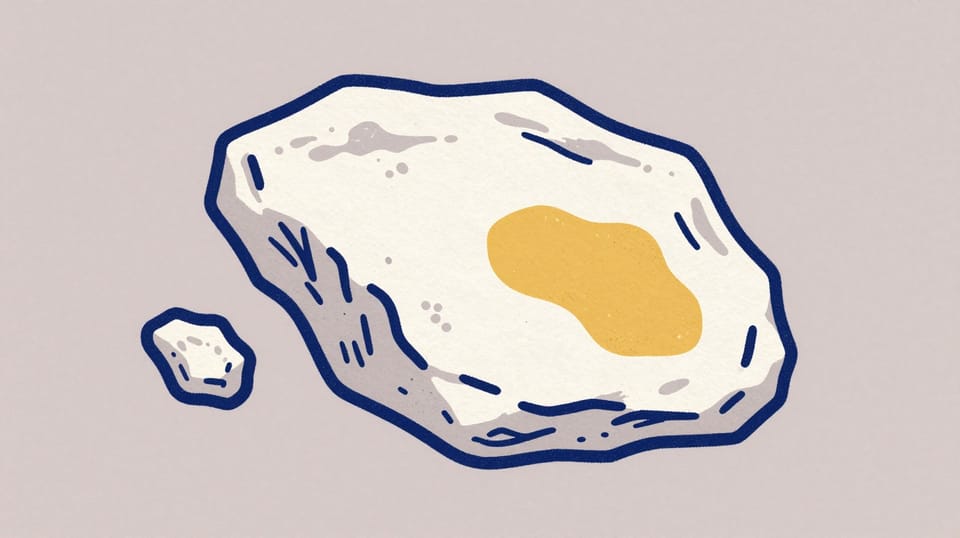
The agency’s update shows Didymos in visible light, multispectral observations and thermal infrared, with a monochrome image resolving approximately 2.7 m per pixel.
Numbers in brackets link to the sources listed below.
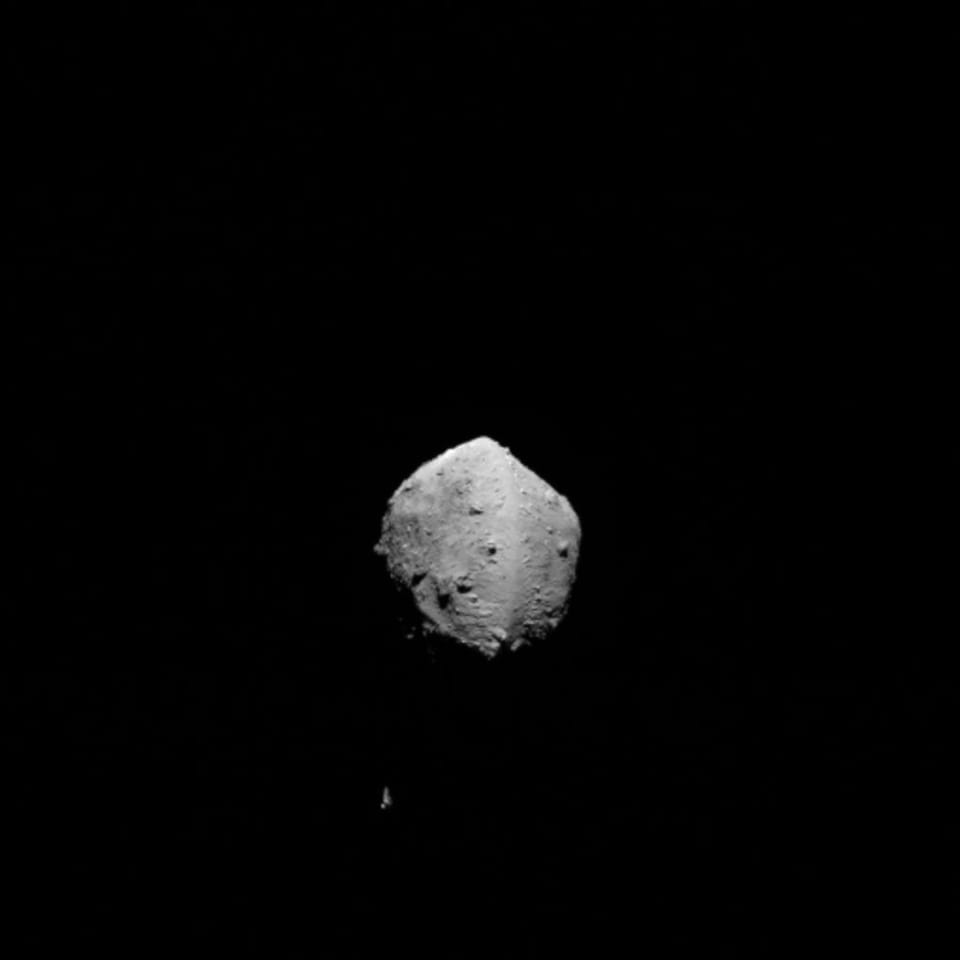
The European Space Agency published an update on 17 November 2026 showing the asteroid Didymos from 28.5 km away[1European Space AgencyHera surveying asteroids with superhuman visionOpen sourceSources [1]]. The views come from its Hera mission and show Didymos in visible light, multispectral observations and thermal infrared[1European Space AgencyHera surveying asteroids with superhuman visionOpen sourceSources [1]].
ESA described Didymos as the larger of the mission’s target asteroids and singled out the ridge around its equator as a dominant feature[1European Space AgencyHera surveying asteroids with superhuman visionOpen sourceSources [1]]. The agency said Hera uses a combination of instruments to survey its targets, extending its observations beyond what human eyes can see[1European Space AgencyHera surveying asteroids with superhuman visionOpen sourceSources [1]].
ESA identifies Hera as a mission for planetary defence[1European Space AgencyHera surveying asteroids with superhuman visionOpen sourceSources [1]]. The monochrome image included in the update was taken by the spacecraft’s Asteroid Framing Camera, which the agency said is used both to navigate and to carry out scientific observations[1European Space AgencyHera surveying asteroids with superhuman visionOpen sourceSources [1]]. ESA reported that the image’s spatial resolution was approximately 2.7 m for each pixel[1European Space AgencyHera surveying asteroids with superhuman visionOpen sourceSources [1]]. Spatial resolution describes the level of detail that an imaging system can distinguish.
Sources
- 1Hera surveying asteroids with superhuman vision
PrimaryEuropean Space AgencyAccessed
ITANU’s newsroom system produced this article with AI and checked it against the sources listed above. How we work