ULA's Vulcan rocket fails in flight and loses 40 Amazon Leo internet satellites
The launch from Cape Canaveral on 15 November was the first outright failure for United Launch Alliance since it was formed in 2006. It was also the first of 38 Vulcan flights Amazon has bought.
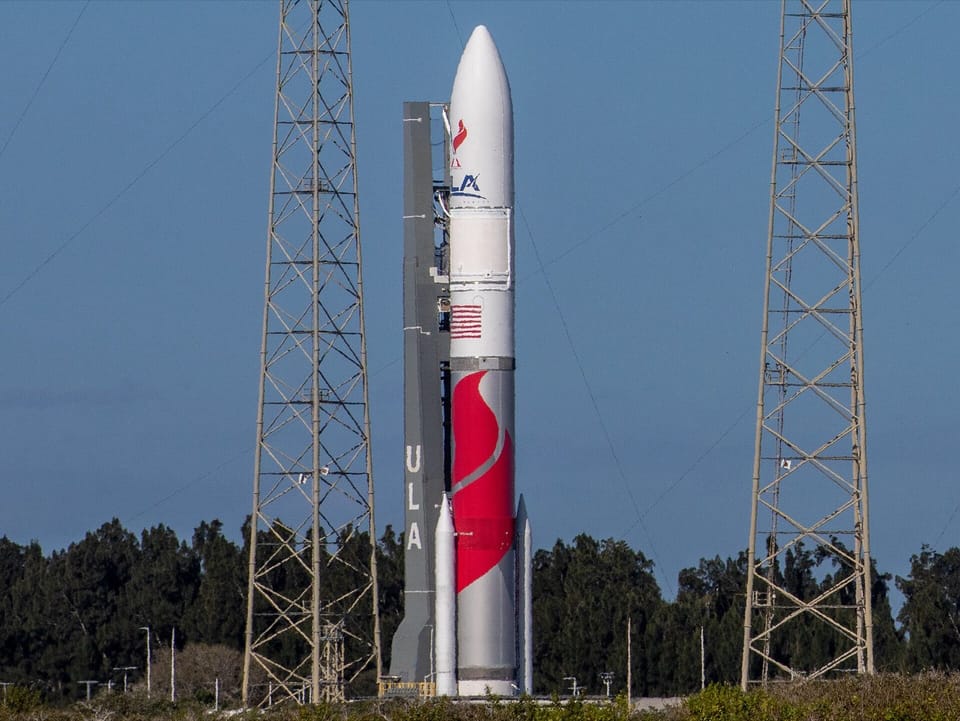
United Launch Alliance's Vulcan rocket failed to put 40 Amazon Leo broadband satellites into orbit on Sunday 15 November after an in-flight anomaly shortly after it lifted off from Florida2. ULA said the problem struck about 10 minutes into the flight1.
The 214-foot-tall rocket lifted off at 12:40 EST from pad 41 at Florida's Cape Canaveral Space Force Station1. Six solid-fuel strap-on boosters and two methane-burning BE-4 engines powered it on a northeasterly path1. Once the stages separated, the hydrogen-fuelled Centaur upper stage took over for a burn planned to last 12 minutes 15 seconds, and ULA's update said something went wrong during that firing1. An upper stage is the part of a rocket that keeps firing after the lower stage drops away and carries the payload the rest of the way to orbit.
The cause was not immediately known1. Earlier attempts had been called off on Friday, when a gaseous nitrogen plant serving several launch providers went down, and on Saturday, because of network problems between the rocket and ground systems1.
In a statement, ULA acknowledged that the flight fell short of its benchmark for mission success2.
Today, we did not meet that standard.
ULA had never lost a rocket outright since Boeing and Lockheed Martin set it up as a partnership in 20061. The mission was also ULA's first Vulcan flight in nine months2. Vulcan is replacing the company's Atlas 5 fleet1.
Sunday's flight was the first of 38 Vulcan launches Amazon has bought for its Leo satellites, which are meant to compete with Starlink and other space-based internet services1. ULA has already flown eight Leo missions on Atlas 5 rockets1. Amazon has also booked 24 launches on Blue Origin's New Glenn, 24 on Ariane 6 and 13 on SpaceX's Falcon 91. The constellation needs more than 3,300 satellites, and this flight would have raised the number launched so far to 4361.
Amazon said the risk that comes with any spaceflight is higher on early missions such as this one, called LV-01, and it stood by its launch provider2.
ULA has been a trusted partner for Amazon, and we believe they'll learn from this mission and deliver on their long-term plans for Vulcan.
Amazon Leo now has to wait for ULA's failure investigation to finish before it flies on Vulcan again1. It is also waiting for New Glenn to return to flight after the rocket exploded on the pad last May1. ULA has not said what exactly caused the failure or when Vulcan will fly again2. The company said it will work with its customer and other relevant organisations to find the cause, decide on fixes and resume flights as soon as it can1.
Sources
- 1ULA suffers first outright failure with loss of Vulcan rocket carrying 40 Amazon Leo satellites
IndependentSpaceflight NowAccessed
- 2US rocket firm ULA fails to deploy 40 Amazon Leo satellites after flight anomaly
IndependentAnadolu AgencyAccessed
ITANU’s newsroom system produced this article with AI and checked it against the sources listed above. How we work