NASA announces end of space station telescope science operations
NASA says NICER exceeded its initial mission by six and a half years. Teams plan to complete its observation archive and detach the telescope from the station.
Numbers in brackets link to the sources listed below.
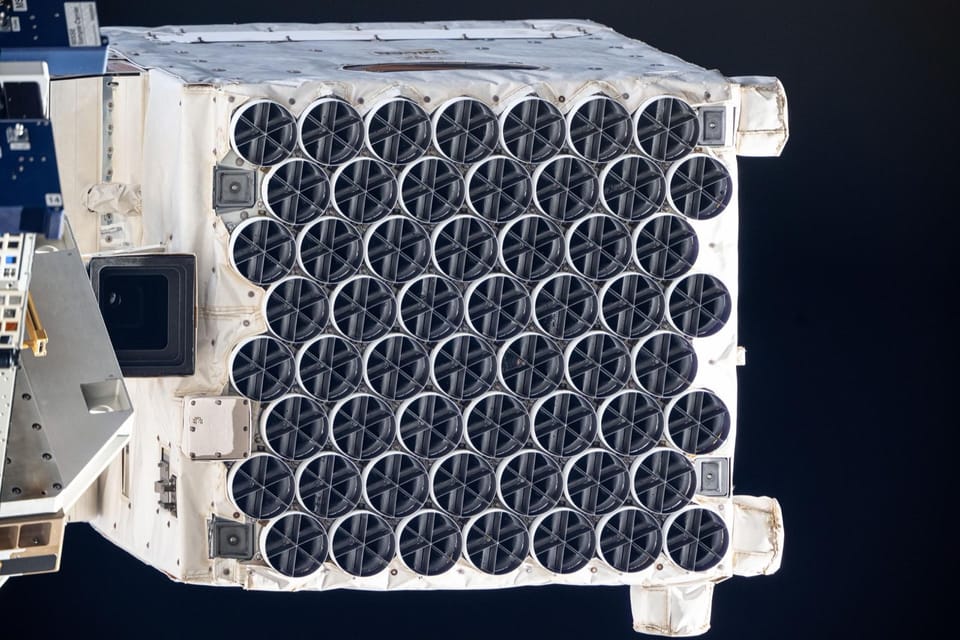
NASA announced on 17 November 2026 that science operations have ended for NICER, its telescope aboard the International Space Station[1NASANICER Status UpdatesOpen sourceSources [1]]. According to the agency, the telescope continued operating beyond its initial mission for six and a half years[1NASANICER Status UpdatesOpen sourceSources [1]].
NICER stands for Neutron star Interior Composition Explorer, according to NASA[1NASANICER Status UpdatesOpen sourceSources [1]]. The agency said that in June 2025 the telescope suddenly could no longer swivel from side to side beyond its existing orientation, limiting its ability to track objects in space[1NASANICER Status UpdatesOpen sourceSources [1]]. NASA said the team suspended data collection while it investigated the problem[1NASANICER Status UpdatesOpen sourceSources [1]].
NASA said plans are now being developed jointly by the space station team and mission team to complete the telescope’s 8-year archive of scientific observations in X-rays[1NASANICER Status UpdatesOpen sourceSources [1]]. X-rays are a form of electromagnetic radiation with wavelengths shorter than visible light. Their plans also cover decommissioning the telescope and detaching it from its position near the station’s starboard solar array[1NASANICER Status UpdatesOpen sourceSources [1]].
Sources
- 1NICER Status Updates
PrimaryNASAAccessed
ITANU’s newsroom system produced this article with AI and checked it against the sources listed above. How we work