Astronomers trace a star’s spiral into a giant in Andromeda
The team linked seven years of brightening to friction as the smaller star’s orbit tightened. NASA says Webb supplied the final evidence 47 days after the eruption peaked.
Numbers in brackets link to the sources listed below.
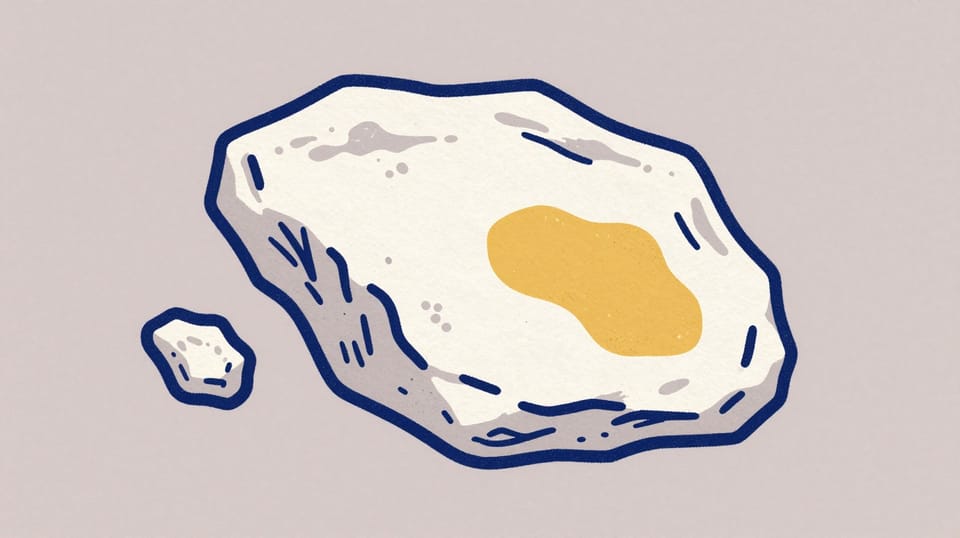
Astronomers traced how a star spiralled through the outer layers of a giant in the Andromeda galaxy and merged with its core[1arXivAn inspiral of a star inside a common envelope with its giant companionOpen sourceSources [1]]. Nature published the team’s reconstruction of the eruption, designated AT 2025abao, on 18 November[1arXivAn inspiral of a star inside a common envelope with its giant companionOpen sourceSources [1]].
The stars had orbited each other for thousands of years[3Live ScienceAstronomers spot giant star swallowing its companion in first-ever observations of a stellar mergerOpen sourceSources [3]]. The researchers concluded that the pair entered a phase called common-envelope evolution, in which both stars orbit inside a shared layer of gas and friction draws them closer[1arXivAn inspiral of a star inside a common envelope with its giant companionOpen sourceSources [1]]. They estimated that the giant had about seven times the Sun’s mass and the companion about 0.7 times the Sun’s mass[1arXivAn inspiral of a star inside a common envelope with its giant companionOpen sourceSources [1]].
By examining the stars’ light before and after the eruption, the team linked seven years of gradual brightening to energy released by friction as the smaller star’s orbit tightened[1arXivAn inspiral of a star inside a common envelope with its giant companionOpen sourceSources [1]]. The researchers report that the final merger took fewer than 10 orbits and expelled roughly the outermost 10% of the giant’s envelope[1arXivAn inspiral of a star inside a common envelope with its giant companionOpen sourceSources [1]].
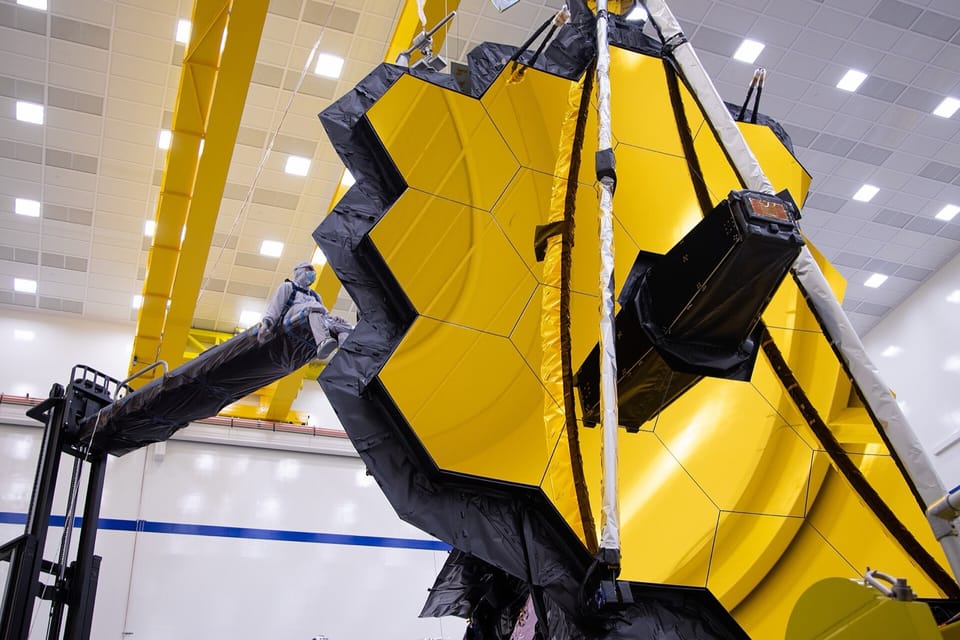
NASA says its James Webb Space Telescope supplied the final evidence in December 2025, when it observed the system 47 days after peak brightness[2NASA ScienceNASA Data Clinches First-of-Its-Kind Stellar MergerOpen sourceSources [2]]. Webb’s infrared measurements revealed dust the giant had shed over centuries, helping researchers identify a model that matched the observations[2NASA ScienceNASA Data Clinches First-of-Its-Kind Stellar MergerOpen sourceSources [2]]. That model put the giant’s radius before the eruption at 350 times the Sun’s and its brightness at 18,000 times the Sun’s[2NASA ScienceNASA Data Clinches First-of-Its-Kind Stellar MergerOpen sourceSources [2]].
Sources
- 1An inspiral of a star inside a common envelope with its giant companion
PrimaryarXivAccessed
- 2NASA Data Clinches First-of-Its-Kind Stellar Merger
PrimaryNASA ScienceAccessed
- 3Astronomers spot giant star swallowing its companion in first-ever observations of a stellar merger
IndependentLive ScienceAccessed
ITANU’s newsroom system produced this article with AI and checked it against the sources listed above. How we work